
How Payment Networks Actually Work
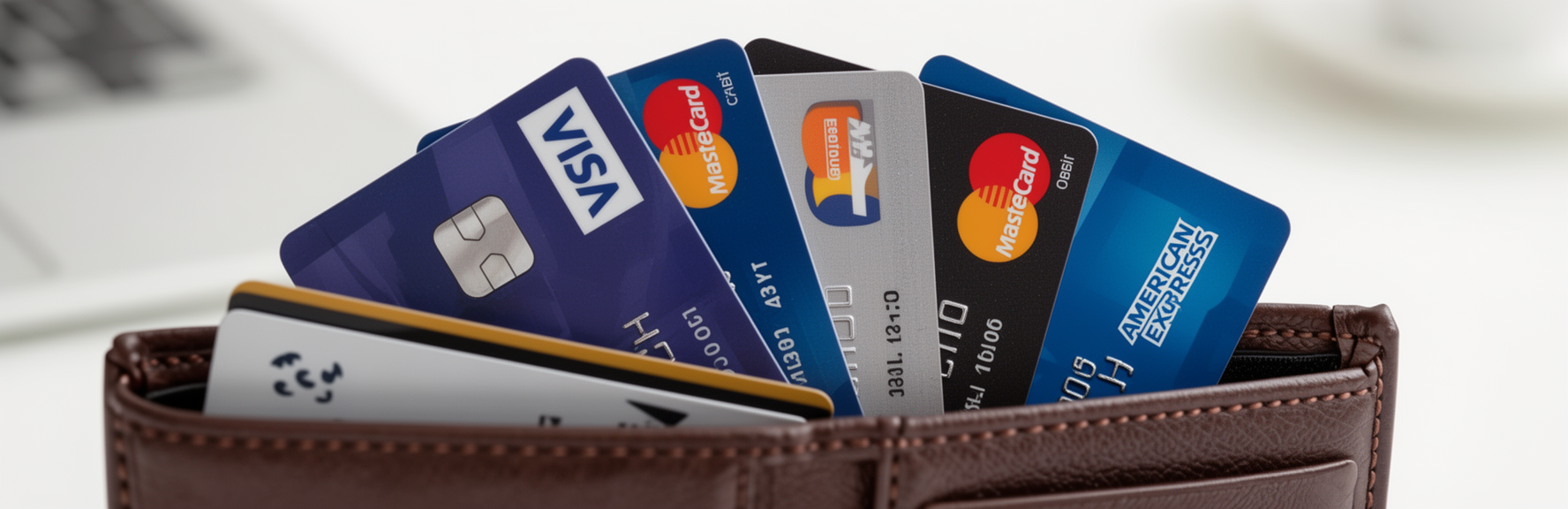
Before diving into comparisons, let's clarify the players. Payment networks (Visa, Mastercard, Amex, Discover) are the rails that transactions travel on. They're different from issuing banks (who give cards to customers) and acquiring banks (who provide your merchant account). Think of networks as highways—they set the rules and collect tolls, but don't own the cars or destinations.
Visa: The Global Standard
Market Position Visa processes over 150 billion transactions annually, commanding roughly 50% of global card payment volume. If you accept cards, you accept Visa—it's non-negotiable.
For Your Business Visa's ubiquity means predictable acceptance costs, typically 1.5-2.5% for ecommerce. Their extensive fraud prevention tools (Visa Secure, formerly Verified by Visa) reduce chargebacks. International expansion is simpler—Visa operates in 200+ countries. Their new push into B2B payments could benefit wholesalers and manufacturers.
Customer Behavior Visa cardholders span all demographics but tend toward everyday purchases. Average transaction values are moderate. These customers expect universal acceptance—not taking Visa signals "amateur operation" to many consumers.
Hidden Advantage Visa's network tokenization replaces sensitive card data with unique tokens, improving security and authorization rates. This can increase successful transactions by 2-3%.
Mastercard: The Close Second
Market Position With 35% global market share, Mastercard is Visa's primary rival. They're particularly strong in Europe and emerging markets.
For Your Business Fees mirror Visa's closely—expect 1.5-2.5% for standard ecommerce. Mastercard's Digital Enablement Service allows instant provisioning of cards to digital wallets, potentially increasing mobile conversions. Their True Name initiative (allowing chosen names on cards) demonstrates social awareness that resonates with younger consumers.
Customer Behavior Mastercard users are virtually indistinguishable from Visa users in purchasing patterns. However, Mastercard's stronger international presence means better acceptance for cross-border transactions, particularly in Europe and Latin America.
Strategic Consideration Mastercard's Installments program allows customers to convert purchases to fixed-payment plans post-transaction. This flexibility can increase average order values by 20-40%.
American Express: The Premium Play
Market Position Amex holds about 8% market share but punches above its weight in transaction value. They're both network and issuer, giving them unique control.
For Your Business Here's the trade-off: Amex fees run 2.5-3.5%, noticeably higher than Visa/Mastercard. However, Amex cardholders spend 3x more on average and have higher approval rates. They're also fiercely loyal—75% will abandon purchases if Amex isn't accepted.
For luxury goods, travel, or B2B, accepting Amex is essential. Their SafeKey 2.0 authentication reduces fraud without adding friction. The OptBlue program (through payment processors) can lower rates for small businesses under $1M annual Amex volume.
Customer Profile Amex users skew affluent, educated, and urban. They value rewards and premium experiences. Average order values are significantly higher. These customers often use Amex specifically for larger purchases to maximize rewards.
Business Services Amex offers superior merchant support and faster dispute resolution. Their data analytics tools provide valuable customer insights other networks don't match.
Discover: The Domestic Alternative
Market Position Discover has 4% U.S. market share but virtually no international presence. They're fighting for relevance through partnerships and competitive pricing.
For Your Business Discover's rates match Visa/Mastercard (1.5-2.5%), making acceptance cost-neutral. They waive fees for charities and offer cash incentives for new merchant accounts. Their partnership with PayPal expands digital acceptance.
However, international expansion is problematic. Discover cards aren't widely accepted outside North America, potentially frustrating traveling customers.
Customer Reality Discover cardholders are price-conscious and value-oriented. They appreciate merchants who accept their cards and often show loyalty to businesses that do. Transaction sizes are moderate, between Visa/Mastercard and Amex levels.
Network Partnerships Discover's partnerships with UnionPay (China), JCB (Japan), and others technically provide global reach, but practical acceptance remains limited.
Emerging Players and Considerations
UnionPay Essential for Chinese customers. With 45% of global cards in circulation, ignoring UnionPay means missing the world's largest consumer market. Acceptance is straightforward through most payment processors.
Digital Wallets Impact Apple Pay, Google Pay, and Samsung Pay use existing card networks but can negotiate better rates. Accepting these can lower overall processing costs while improving conversion rates by 10-15%.
Regional Networks Interac (Canada), Cartes Bancaires (France), and others dominate specific markets. For international expansion, research local preferences.
Strategic Recommendations
Accept the Big Four Not accepting all major networks costs more in lost sales than saved processing fees. Exception: Ultra-low-margin businesses might skip Amex.
Negotiate Based on Volume Networks have flexibility. Processing $1M+ annually? Negotiate rates, especially with Amex. Use competitive proposals as leverage.
Optimize for Your Market
- Luxury/Travel: Prioritize Amex integration and benefits
- International: Ensure strong Visa/Mastercard support
- Chinese Market: UnionPay is mandatory
- Budget-Conscious: Highlight Discover acceptance
Monitor Network Fees Beyond base rates, watch for assessment fees, cross-border fees, and currency conversion charges. These can add 1-2% to international transactions.
The Future Landscape
Networks are evolving beyond payment processing. Visa's APIs enable new fintech services. Mastercard's acquisition spree targets identity and loyalty. Amex pushes deeper into B2B. Discover partners aggressively to stay relevant.
For your business, this means payment networks increasingly offer value beyond transaction processing—fraud prevention, data analytics, loyalty programs, and financial services. Choose partners aligned with your growth strategy, not just lowest fees.
The right payment mix isn't about accepting everything—it's about understanding your customers and optimizing accordingly.